How to Watch Live NBA Games in 4K (2026 Guide)
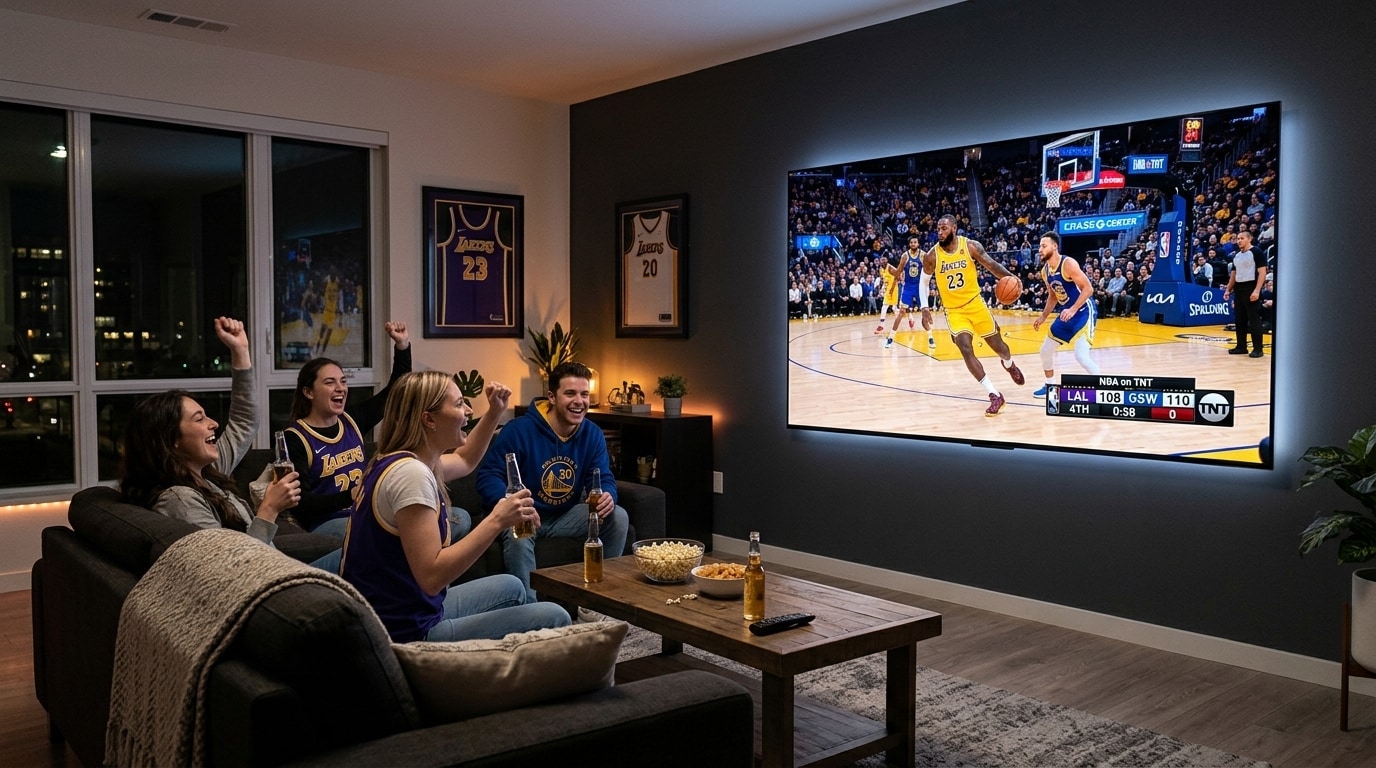
For dedicated basketball enthusiasts, streaming live NBA games has become an increasingly complicated and expensive puzzle. The fragmentation of television broadcasting rights across legacy cable networks, national terrestrial stations, direct-to-consumer streaming apps, and regional sports networks (RSNs) has created a frustrating viewing environment. Fans paying premium monthly prices for official streaming subscriptions routinely encounter local blackout restrictions that prevent them from watching their hometown team play on their home television.
High-performance IPTV has emerged as the definitive solution for basketball fans seeking complete, unconstrained access to every live game from preseason through the NBA Finals. By providing both Home and Away team regional broadcast feeds, national network streams in uncompressed 60 FPS, dedicated 24/7 NBA TV coverage, and zero geographical blackout barriers, an enterprise service like Kemo IPTV brings the full arena experience straight to your living room.
However, streaming live basketball presents unique technical challenges. The rapid movement of players across the hardwood, high-speed bounce passes, flashbulb camera strobe lighting, and rapid fast-break camera transitions demand significant temporal clarity and stable bitrate delivery. Watching basketball on an underpowered stream locked at 30 frames per second results in blurry player jerseys, jittery ball tracking, and noticeable eye fatigue.
This comprehensive guide delivers the technical architecture, player tuning protocols, network optimizations, and troubleshooting steps needed to stream every NBA game in pristine 4K and 1080p 60 FPS without blackouts or buffering interruptions.
Experience Kemo IPTV
Upgrade your streaming with high-performance anti-freeze infrastructure. Over 50,000 live channels, 4K 60FPS sports, and 200,000+ VODs on demand.
Quick Summary: The NBA IPTV Streaming Playbook
Before analyzing the broadcast mechanics in detail, here is the essential configuration blueprint for streaming live basketball:
+-------------------------------------------------------------------------+
|                  THE ULTIMATE NBA STREAMING CHECKLIST                   |
+-------------------------------------------------------------------------+
| Target Framerate:   True 60 FPS (or 59.94 FPS) - Non-negotiable        |
| Target Bitrate:     12.0 – 16.0 Mbps (1080p) / 20.0 – 30.0 Mbps (4K)   |
| Hardware Baseline:  Firestick 4K Max, Apple TV 4K, or Nvidia Shield Pro |
| Player App:         TiviMate (Android) or UHF (Apple tvOS)              |
| Key Setting:        Auto Frame Rate (AFR) Match = ENABLED               |
| Blackout Defense:   Regional Sports Feeds (Both Home and Away Feeds)    |
| Network Route:      Hardwired Cat6 Ethernet or 5 GHz Wi-Fi band         |
+-------------------------------------------------------------------------+
The Blackout Dilemma: Why Official Streaming Apps Restrict Fans
To appreciate why IPTV has become essential for sports followers, one must understand the economics behind regional television blackouts.
How NBA Broadcast Licensing Works
Broadcasting rights for the National Basketball Association are divided into two distinct categories:
- National Broadcast Rights: High-profile primetime games are licensed nationally to major television networks, including ESPN, ABC, TNT, and NBA TV. During these exclusive national broadcast windows, no local station may air the game.
- Regional Sports Network (RSN) Rights: The remaining 80% of regular season games are sold exclusively to regional cable and sports networks (such as FanDuel Sports Network / Bally Sports, YES Network, Spectrum SportsNet, NBC Sports Regional, and Altitude Sports). These regional networks pay multi-million-dollar rights fees to ensure exclusive distribution within their designated geographical home territory.
The Blackout Mechanism Explained
When a fan subscribes to official standalone streaming packages like NBA League Pass, the platform uses IP geolocation, mobile GPS coordinates, and billing zip codes to determine the user's physical location.
If you live in the greater Los Angeles area, League Pass automatically blacks out all Los Angeles Lakers and LA Clippers broadcasts, directing you to subscribe to costly regional cable bundles. If a game is broadcast nationally on ESPN or TNT, League Pass blacks out the feed nationwide.
In contrast, Kemo IPTV captures direct satellite downlink signals across every regional television market simultaneously. Because the broadcast feeds are delivered across global Content Delivery Network (CDN) edge clusters without geographic filtering, subscribers simply select the dedicated Home or Away regional feed inside their channel bouquet. Whether you live in downtown Chicago, rural Canada, London, or Sydney, you can watch any game live with zero blackout restrictions.
The Technical Anatomy of Basketball Video: Why 60 FPS Is Critical
Basketball is one of the most demanding sports for digital video encoding engines. The nature of the game requires specific transmission standards that distinguish high-grade broadcast streams from budget alternatives.
+-------------------------------------------------------------------------+
|              SPATIAL VS. TEMPORAL COMPLEXITY IN BASKETBALL              |
+-------------------------------------------------------------------------+
| Temporal Challenge: 10 Athletes sprinting, fast-break ball movement     |
| Spatial Challenge:  High-contrast court lines, parquet wood reflections |
| Result at 30 FPS:   Noticeable ball ghosting, blurry jerseys, judder    |
| Result at 60 FPS:   Fluid ball trajectory, crisp text, smooth panning   |
+-------------------------------------------------------------------------+
1. Temporal Resolution: 30 FPS vs. 60 FPS
In traditional cinematography, 24 frames per second (FPS) produces the organic motion blur that human eyes associate with motion pictures. However, in live professional basketball:
- The basketball travels through the air at speeds exceeding 40 miles per hour during rapid outlet passes.
- A camera rapidly tracking a baseline-to-baseline fast break must capture rapid horizontal displacement across the field of view.
When a video stream is limited to 30 FPS, the basketball appears as a distorted, flashing blur rather than a crisp spherical object. Player numbers become difficult to read during fast transitions, and the entire court appears to judder.
A true 60 FPS (or European 50 FPS) broadcast delivers double the visual data per second. Each frame captures an exact slice of time, ensuring smooth motion, readable jerseys, and crisp ball tracking. Kemo IPTV prioritizes 60 FPS delivery on all primary sports and basketball bouquets.
2. Parquet Floor Reflections and Compression Artifacts
Basketball courts feature reflective varnished hardwood, dynamic arena spotlighting, crowd camera strobes, and high-contrast hardwood paint lines.
When a video stream is compressed with inadequate bitrate (such as budget providers broadcasting at 3.5 Mbps), the video encoder cannot keep pace with the changing pixel data. The court surface dissolves into noticeable square macroblocks, particularly around moving player shoes and the painted key.
To maintain pristine visual definition, a 1080p 60 FPS basketball broadcast requires a clean, constant bitrate between 12 Mbps and 17 Mbps encoded in H.265 (HEVC) or high-profile H.264. True 4K broadcasts require 22 Mbps to 30 Mbps.
Channel Bouquet Blueprint: Every Channel You Need for the NBA Season
To catch every matchup from opening night in October through the NBA Finals in June, your IPTV subscription must include these key networks:
+-------------------------------------------------------------------------+
|                     COMPLETE NBA BROADCAST MATRIX                       |
+-------------------------------------------------------------------------+
| National Networks:   ABC HD/4K, ESPN, ESPN2, TNT, NBA TV                |
| Regional RSNs:       FanDuel Sports (Bally), YES Network, NBC Sports,   |
|                      Spectrum SportsNet, Altitude Sports, Marquee       |
| Canadian Channels:   TSN 1-5, Sportsnet (East, West, Ontario, Pacific)  |
| Special Packages:    NBA League Pass Feeds (Home & Away Commentary)     |
+-------------------------------------------------------------------------+
1. National Broadcast Networks
- ESPN & ESPN2: Primary hosts for Wednesday and Friday night doubleheaders, along with major playoff series and the Eastern Conference Finals.
- ABC: Flagship broadcaster for marquee Sunday afternoon showcases, Christmas Day games, and exclusive home of the NBA Finals.
- TNT (Turner Sports): Iconic home of Tuesday and Thursday night doubleheaders, NBA All-Star Weekend, and the Western Conference Finals.
- NBA TV: 24/7 dedicated basketball network providing daily live primetime matchups, studio analysis, press conferences, and Summer League action.
2. Regional Sports Networks (RSNs) & Local Affiliates
Over 80% of regular season basketball games air exclusively on local RSNs. A comprehensive provider must deliver reliable regional feeds, including:
- FanDuel Sports Networks (Formerly Bally Sports): Covers the Atlanta Hawks, Charlotte Hornets, Cleveland Cavaliers, Detroit Pistons, Indiana Pacers, LA Clippers, Memphis Grizzlies, Miami Heat, Milwaukee Bucks, Minnesota Timberwolves, New Orleans Pelicans, Oklahoma City Thunder, Orlando Magic, and San Antonio Spurs.
- NBC Sports Regional Networks: Home of the Boston Celtics, Chicago Bulls, Philadelphia 76ers, and Sacramento Kings.
- YES Network: Exclusive regional broadcaster for the Brooklyn Nets.
- Spectrum SportsNet: Exclusive regional television home of the Los Angeles Lakers.
- Altitude Sports: Broadcast home of the Denver Nuggets.
- Space City Home Network: Broadcast home of the Houston Rockets.
3. Dedicated League Pass Feeds with Home & Away Commentary
One of the most enjoyable aspects of watching basketball on Kemo IPTV is having access to both Home and Away broadcast audio feeds for every game. Rather than being forced to listen to biased home announcers, you can switch between broadcast commentary teams with a simple tap on your remote control.
Hardware Tier List for 4K 60 FPS Basketball Streaming
Live 60 FPS video decoding places higher computational demands on streaming hardware than static on-demand movies. Here is our ranking of the best streaming devices for basketball:
Tier 1: The Champions (Flawless 60 FPS Playback)
- Apple TV 4K (3rd Gen, A15 Bionic): The absolute smoothest IPTV experience on the market. Its powerful processor handles 4K 60 FPS streams effortlessly, supports native tvOS frame rate matching, and provides instant app switching. Paired with the UHF player app, it delivers unmatched performance. Check our Apple TV 4K IPTV setup guide.
- Nvidia Shield TV Pro (Tegra X1+): The undisputed king of Android TV. Features Gigabit Ethernet, AI-enhanced 4K upscaling for 720p/1080p regional sports feeds, native Dolby Audio bitstreaming, and flawless TiviMate multiview handling.
Tier 2: The Value Performers (High Performance, Budget Friendly)
- Amazon Fire TV Stick 4K Max (2nd Gen): Supports Wi-Fi 6E, hardware AV1 decoding, and runs TiviMate smoothly with minimal buffering. Outstanding performance-to-price ratio. Follow our Firestick IPTV installation walkthrough.
- Chromecast with Google TV (4K): Clean Google TV interface, reliable hardware decoding, and easy remote navigation for TiviMate and IPTV Smarters Pro.
Tier 3: Devices to Avoid for High-End Sports
- Generic unbranded Android TV boxes running modified tablet software without certified Google Widevine or hardware MediaCodec profiles.
- Integrated Smart TV processors (older Samsung Tizen or LG webOS models) that suffer from thermal throttling during extended 3-hour live broadcasts.
Tuning Your IPTV Player for 60 FPS Basketball
Even the fastest hardware requires proper software configuration to deliver fluid basketball playback. Follow these configuration steps in your player app (such as TiviMate):
+-------------------------------------------------------------------------+
|                  PLAYER TUNING FOR LIVE BASKETBALL                      |
+-------------------------------------------------------------------------+
| 1. Video Decoder:        Hardware (MediaCodec) - Bypasses CPU           |
| 2. Auto Frame Rate (AFR):Turn ON - Synchronizes TV panel to 59.94/60Hz  |
| 3. Buffer Size:          Set to "Normal" (1.5 to 2.5 seconds)           |
| 4. Audio Output:         Passthrough (Bitstream to Soundbar)            |
| 5. Stream Transport:     MPEG-TS (Faster initial connection handshake)  |
+-------------------------------------------------------------------------+
1. Activating Auto Frame Rate (AFR) Matching
In North America, NBA broadcasts are transmitted at 59.94 Hz or 60.00 Hz. If your television display is locked at a standard 50 Hz European refresh rate or suffers from 3:2 pulldown conversion, you will observe slight stutter every few seconds.
- In TiviMate, go to Settings > Playback > Auto frame rate (AFR) and turn it ON.
- Check the box for Switch refresh rate.
- When you launch an NBA broadcast, your television screen will briefly flash black as it matches its physical refresh rate directly to the incoming 60 FPS broadcast. The result is completely fluid player and ball movement. For broader setup tips, consult our best IPTV players and streaming apps review.
2. Calibrating the Playback Buffer Size
Setting your buffer too high introduces a 15-to-30-second delay behind live action, meaning group text chats and sports betting apps may spoil exciting plays before they happen on your screen.
- Go to Settings > Playback > Buffer size.
- Select Normal (or Small on wired Gigabit fiber connections).
- This keeps your stream within 3 to 6 seconds of real-time satellite broadcast timing while maintaining enough cushion to absorb momentary network fluctuations.
Multi-Screen Multiview: Watch Up to 4 NBA Games at Once
During busy regular-season nights—especially Wednesdays and Fridays when 10 or 12 games occur simultaneously—navigating between single feeds means missing crucial buzzer-beaters.
+-------------------------------------------------------+
|              TIVIMATE MULTIVIEW DISPLAY MODES         |
+-------------------------------------------------------+
|  [ Screen 1: Lakers vs. Warriors ] [ Screen 2: Celtics vs. Bucks ]  |
|  [ Screen 3: Nuggets vs. Suns   ] [ Screen 4: Heat vs. 76ers    ]  |
+-------------------------------------------------------+
With a multi-device subscription from Kemo IPTV and an application like TiviMate or iMPlayer, you can build an authentic multi-game command center:
- While watching any live game in TiviMate, press the Select or Down button on your remote to bring up the player control menu.
- Select the Multiview icon.
- Choose your desired layout: 2 Screens (Side-by-Side), 3 Screens (One Large, Two Small), or 4 Screens (2x2 Quad Grid).
- Click on each empty window to assign a specific live game from your NBA bouquet.
- Highlight any active screen and press Select to immediately route its audio commentary to your living room soundbar.
Optimizing In-Home Network Performance for Sports
A stable in-home network is essential for streaming high-bitrate live sports. Follow these networking best practices:
- Hardwire with Cat6 Ethernet: Wi-Fi signals fluctuate whenever household members stream videos, make video calls, or run appliances. A direct Ethernet cable from your router to your streaming device provides rock-solid bandwidth with sub-millisecond local latency.
- Use 5 GHz Wi-Fi Exclusively: If running an Ethernet cable is not possible, ensure your streaming device is connected to your router’s 5 GHz or 6 GHz band. The older 2.4 GHz band is crowded with interference, which frequently triggers buffering during high-bitrate live sports.
- Prevent Bufferbloat via Router QoS: If your home network experiences lag when other devices download files, enable Quality of Service (QoS) in your router settings. Prioritize your streaming media player's IP address so video packets always take priority over background downloads. Verify your connection quality using our IPTV internet speed requirements guide.
Troubleshooting Common NBA Streaming Issues
Even on optimized setups, unexpected streaming glitches can occasionally occur. Here is how to resolve them quickly:
+-------------------------------------------------------------------------+
|                  COMMON NBA STREAMING ISSUES & DIRECT FIXES             |
+-------------------------------------------------------------------------+
| Issue 1: Stream freezes or loops every few minutes                     |
| Fix:     Clear player app cache and toggle between MPEG-TS and HLS      |
|                                                                         |
| Issue 2: Audio plays clearly but screen remains completely black        |
| Fix:     Switch video decoder from Hardware to Software in player       |
|                                                                         |
| Issue 3: Stream buffers only on game nights (ISP throttling)            |
| Fix:     Activate a fast VPN using WireGuard protocol to bypass ISP     |
+-------------------------------------------------------------------------+
1. The Stream Freezes or Stutters Repeatedly
- Check if an alternative feed exists in your channel list (e.g., switch between the Home regional feed, Away regional feed, or a Canadian broadcast feed).
- In your player settings, switch your stream format from MPEG-TS to HLS (.m3u8). HLS delivers video in segmented chunks that are more resilient to momentary packet loss.
2. Audio Plays But the Video Screen Is Pitch Black
- This happens when your device’s hardware decoder encounters an unexpected video profile or color space mismatch on a 4K feed.
- Go to your player’s playback settings and toggle the video decoder from Hardware to Software. For complete diagnostic steps, read our guide on fixing IPTV black screens with sound.
3. Buffering Occurs Exclusively During High-Profile Matchups
- If your internet connection performs perfectly for general browsing and streaming during the day, but begins buffering precisely when primetime NBA games tip off, your ISP may be throttling streaming traffic.
- Enable a secure VPN on your device. Encrypting your traffic prevents your ISP from identifying streaming packets, bypassing artificial bandwidth restrictions.
Complete 30-Team NBA Broadcast Directory: Networks & Regional Affiliates
To help you locate the exact live broadcast for any franchise on game night, here is the complete directory of all 30 NBA teams and their regional television networks available in the Kemo IPTV channel lineup:
Eastern Conference — Atlantic Division
- Boston Celtics: NBC Sports Boston (Commentary: Mike Gorman, Drew Carter, Brian Scalabrine). National showcases on ABC/ESPN/TNT.
- Brooklyn Nets: YES Network (Commentary: Ian Eagle, Ryan Ruocco, Sarah Kustok). Select games on My9.
- New York Knicks: MSG Network / MSG+ (Commentary: Mike Breen, Kenny Albert, Walt "Clyde" Frazier).
- Philadelphia 76ers: NBC Sports Philadelphia / NBC Sports Philadelphia+ (Commentary: Kate Scott, Alaa Abdelnaby).
- Toronto Raptors: TSN (1, 3, 4, 5) and Sportsnet (Ontario, East, Pacific, ONE) sharing regional Canadian broadcast rights (Commentary: Matt Devlin, Jack Armstrong, Alvin Williams).
Eastern Conference — Central Division
- Chicago Bulls: Chicago Sports Network (CHSN) / NBC Sports Chicago (Commentary: Adam Amin, Stacey King).
- Cleveland Cavaliers: FanDuel Sports Network Ohio (Commentary: John Michael, Brad Daugherty).
- Detroit Pistons: FanDuel Sports Network Detroit (Commentary: George Blaha, Greg Kelser).
- Indiana Pacers: FanDuel Sports Network Indiana (Commentary: Chris Denari, Quinn Buckner).
- Milwaukee Bucks: FanDuel Sports Network Wisconsin (Commentary: Lisa Byington, Marques Johnson).
Eastern Conference — Southeast Division
- Atlanta Hawks: FanDuel Sports Network Southeast (Commentary: Bob Rathbun, Dominique Wilkins).
- Charlotte Hornets: FanDuel Sports Network Southeast (Commentary: Eric Collins, Dell Curry).
- Miami Heat: FanDuel Sports Network Sun (Commentary: Eric Reid, John Crotty).
- Orlando Magic: FanDuel Sports Network Florida (Commentary: David Steele, Jeff Turner).
- Washington Wizards: Monumental Sports Network (Commentary: Chris Miller, Drew Gooden).
Western Conference — Northwest Division
- Denver Nuggets: Altitude Sports (Commentary: Chris Marlowe, Scott Hastings).
- Minnesota Timberwolves: FanDuel Sports Network North (Commentary: Michael Grady, Jim Petersen).
- Oklahoma City Thunder: FanDuel Sports Network Oklahoma (Commentary: Chris Fisher, Michael Cage).
- Portland Trail Blazers: Rip City Television Network / ROOT Sports Northwest (Commentary: Kevin Calabro, Lamar Hurd).
- Utah Jazz: KJZZ-TV / Jazz+ (Commentary: Craig Bolerjack, Thurl Bailey).
Western Conference — Pacific Division
- Golden State Warriors: NBC Sports Bay Area (Commentary: Bob Fitzgerald, Kelenna Azubuike).
- LA Clippers: FanDuel Sports Network SoCal / KTLA 5 (Commentary: Brian Sieman, Jim Jackson).
- Los Angeles Lakers: Spectrum SportsNet (Commentary: Bill Macdonald, Stu Lantz).
- Phoenix Suns: Arizona's Family Sports (3TV / AZFamily) (Commentary: Kevin Ray, Eddie Johnson).
- Sacramento Kings: NBC Sports California (Commentary: Mark Jones, Kyle Draper, Kayte Christensen).
Western Conference — Southwest Division
- Dallas Mavericks: KFAA 29 / WFAA (Commentary: Mark Followill, Derek Harper).
- Houston Rockets: Space City Home Network (Commentary: Craig Ackerman, Ryan Hollins).
- Memphis Grizzlies: FanDuel Sports Network Southeast (Commentary: Pete Pranica, Brevin Knight).
- New Orleans Pelicans: Gulf Coast Sports & Entertainment Network (Commentary: Joel Meyers, Antonio Daniels).
- San Antonio Spurs: FanDuel Sports Network Southwest (Commentary: Dan Weiss, Sean Elliott).
Television Display Calibration: Optimizing OLED and Mini-LED for Basketball
Television manufacturers ship displays with store-demo picture profiles that artificially oversaturate colors and apply heavy post-processing. While this looks bright in retail showrooms, it damages the visual fidelity of live basketball broadcasts. Follow these calibration steps on your television panel:
+-------------------------------------------------------------------------+
|                  BASKETBALL DISPLAY CALIBRATION SETTINGS                |
+-------------------------------------------------------------------------+
| Picture Mode:        ISF Expert, Filmmaker Mode, or Movie (Accurate)    |
| Motion Smoothing:    Turn OFF "Soap Opera Effect" (TruMotion/Auto Motion)|
| Color Temperature:   Warm 50 (D65 Standard) - Prevents blue court tint  |
| Sharpness:           Set to 0 or 10% (Prevents artificial white halos)  |
| Dynamic Contrast:    Turn OFF - Prevents brightness pulsing on strobes  |
+-------------------------------------------------------------------------+
- Disable Motion Interpolation (The "Soap Opera Effect"): Every television brand names motion smoothing differently: TruMotion (LG), Auto Motion Plus (Samsung), Motionflow (Sony), or Action Smoothing (TCL). These algorithms attempt to generate fake intermediate frames between broadcast images. On 60 FPS basketball feeds, motion smoothing causes the basketball to disappear intermittently, creates ghosting halos around sprinting players, and increases display latency. Turn it completely OFF or set de-judder to 0.
- Set Accurate Color Temperature to Warm 50 (D65): Default "Standard" or "Vivid" picture modes set color temperature to Cool, giving hardwood courts an unnatural bluish, clinical tint. Switching to Warm 50 or Warm 2 aligns your screen with the D65 white point used by broadcast production trucks, making hardwood look warm and lifelike.
- Reduce Artificial Sharpness to Minimum: Setting sharpness above 15% does not create genuine detail. Instead, it adds harsh white outline halos around player jerseys, basketball rims, and court boundaries. Set your television’s sharpness control between 0 and 10 for clean, natural edges.
Stadium Audio Immersion: Dolby Digital 5.1 & Commentary Balancing
Basketball audio is rich with acoustic detail: the rhythmic squeak of sneakers on polished hardwood, the sharp thud of a pass hitting a player’s chest, courtside banter, and the explosive roar of 20,000 fans as a clutch three-pointer drops through the net.
How to Configure Multi-Channel Surround Sound
- Enable HDMI eARC Audio Passthrough: Connect your streaming hardware to your television via HDMI, and run a high-speed HDMI cable from your TV's eARC port to your soundbar or AV receiver.
- Set Audio Output to Bitstream (Passthrough): In your player app (TiviMate/UHF) and streaming device system settings, change audio output from Stereo PCM to HDMI Passthrough (Bitstream). This allows Dolby Digital AC3 5.1 tracks broadcast on ESPN, ABC, and TNT to be decoded directly by your surround sound system.
- Boost the Center Audio Channel for Dialogue: If stadium crowd noise drowns out the play-by-play commentators, enter your soundbar or receiver settings and increase the Center Channel Volume by +2dB to +4dB. In standard 5.1 surround mixes, commentary is routed strictly through the center channel, while court sounds and crowd noise are dispersed through left, right, and surround speakers.
The 30-Minute Game-Day Pre-Flight Checklist
To avoid missing opening tip-off due to unexpected technical issues, execute this quick 10-step checklist 30 minutes before the game:
- Reboot Your Streaming Device: Power cycle your Firestick, Apple TV, or Android TV to clear accumulated memory and background tasks.
- Verify Hardware Ethernet Connection: Confirm your device is communicating via wired Cat6 Ethernet or connected to the 5 GHz Wi-Fi frequency band.
- Test Network Bandwidth: Run a speed test via our internet speed requirements guide to confirm you have at least 25 Mbps of available throughput.
- Synchronize EPG Guide Data: Open your player app, navigate to EPG settings, and click Update EPG to ensure tonight’s game times and matchups are current.
- Check Both Home and Away Channels: Locate your desired matchup in the sports bouquet and confirm both regional feeds load cleanly.
- Verify Audio Output: Confirm sound is outputting in multi-channel Dolby or clean stereo without delay.
- Configure Multiview If Watching Multiple Games: Pre-load your second and third games into split-screen windows if multiple matchups overlap.
- Check Auto Frame Rate (AFR) Matching: Ensure AFR is enabled so your screen matches 59.94/60 Hz when the broadcast begins.
- Have a Backup VPN Ready: Ensure a fast VPN app is installed and signed in on your device in case your ISP begins throttling during primetime.
- Set Playback Buffer to Normal: Verify your buffer is set to 1.5 to 2.5 seconds to balance stream stability with real-time live timing.
Frequently Asked Questions
Final Recommendation: Build Your Ultimate Basketball Viewing Setup
Streaming live NBA basketball without restrictions, blackouts, or continuous buffering comes down to three essential elements:
- An enterprise broadcast provider like Kemo IPTV that delivers authentic 60 FPS feeds, both Home and Away regional broadcasts, and robust anti-freeze server infrastructure.
- Capable streaming hardware—such as the Apple TV 4K, Nvidia Shield TV Pro, or Amazon Fire TV Stick 4K Max.
- A properly tuned player application (like TiviMate or UHF) with Auto Frame Rate matching enabled and a hardwired Ethernet connection.
With this setup in place, you can enjoy every fast break, alley-oop, and game-winning buzzer-beater in pristine 4K and 60 FPS throughout the entire basketball season. Explore our full channel lineup or reach out to our team through our live support desk if you need help configuring your hardware before tip-off.